From Unlock15
Evidence
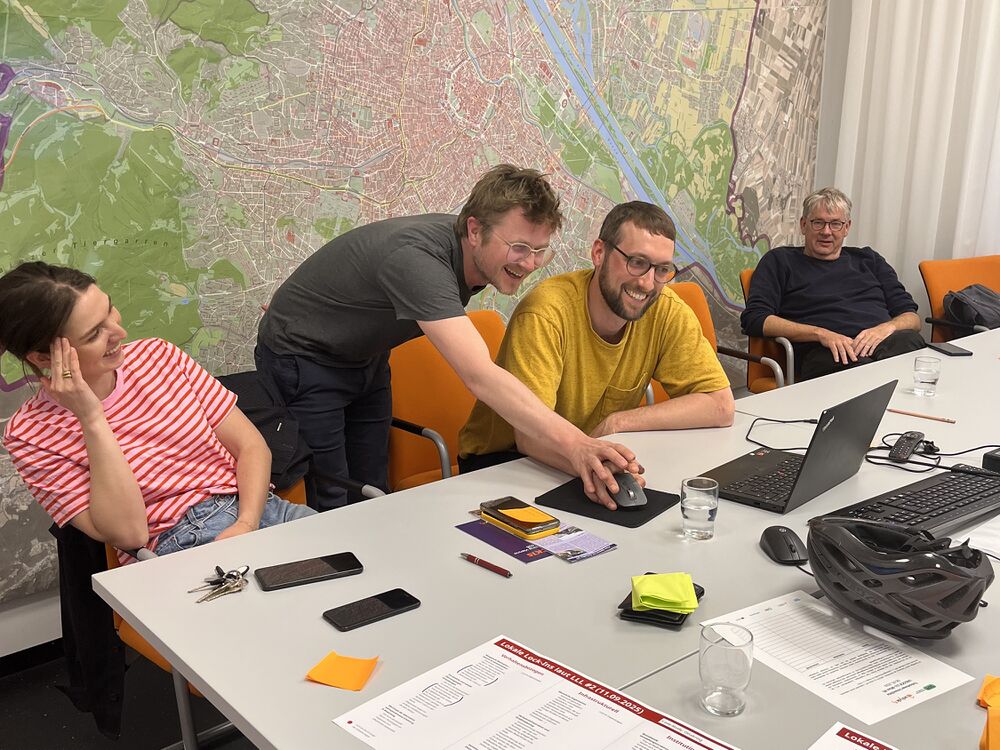
Joint Survey between initiatives and district politics
A joint survey between district politics and initiatives has potential to drive change. A survey means to ask inhabitants of an area what they like or don't like about status quo and what they want to change. The initiative has local knowledge of the area and knows what is important to ask. The survey results give politicans guidance what kind of change is backed up by the inhabitants. From our experience a joint survey is possible when
- all involved people are amicable towards each other
- there is a third neutral party (for example science project or neighbourhood management) that coordinates the process
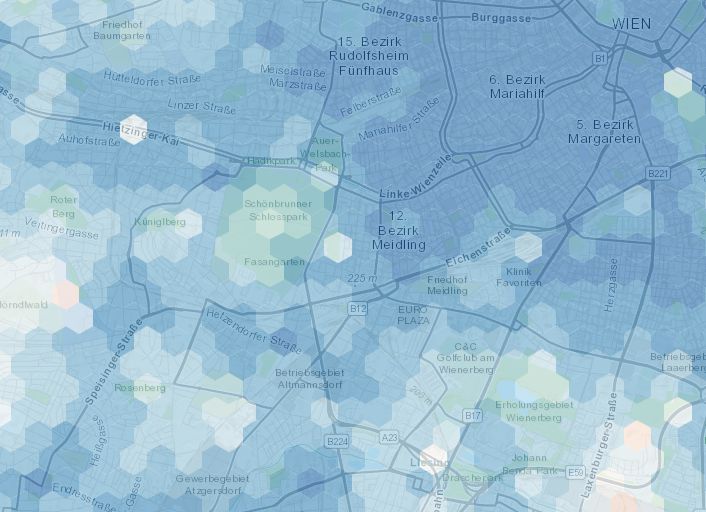
15min-City online Maps
The map shows how close services are if one lives in different areas of the city: in red areas the time needed to access the closest services is on average higher than 15 minutes, while the blue are 15-minute areas. We consider the average time of accessibility to the closest 20 POIs.
Vision
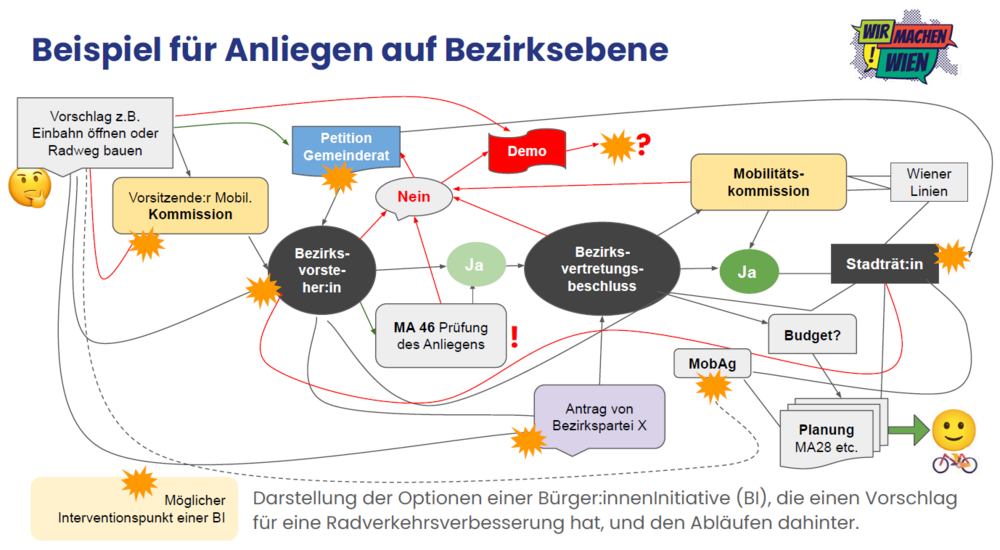
Making processes in public administration more transparent
Mapping of relevant workflows within the public administration to identify critical points / steps.

Learning public participation hub
The Vienna Climate Team is a participatory initiative in Vienna that brings residents, local stakeholders, and the city administration together to co-develop and implement climate protection measures at the district level. It enables citizens to submit ideas, collaborate with experts, and take part in decision-making processes related to urban sustainability.
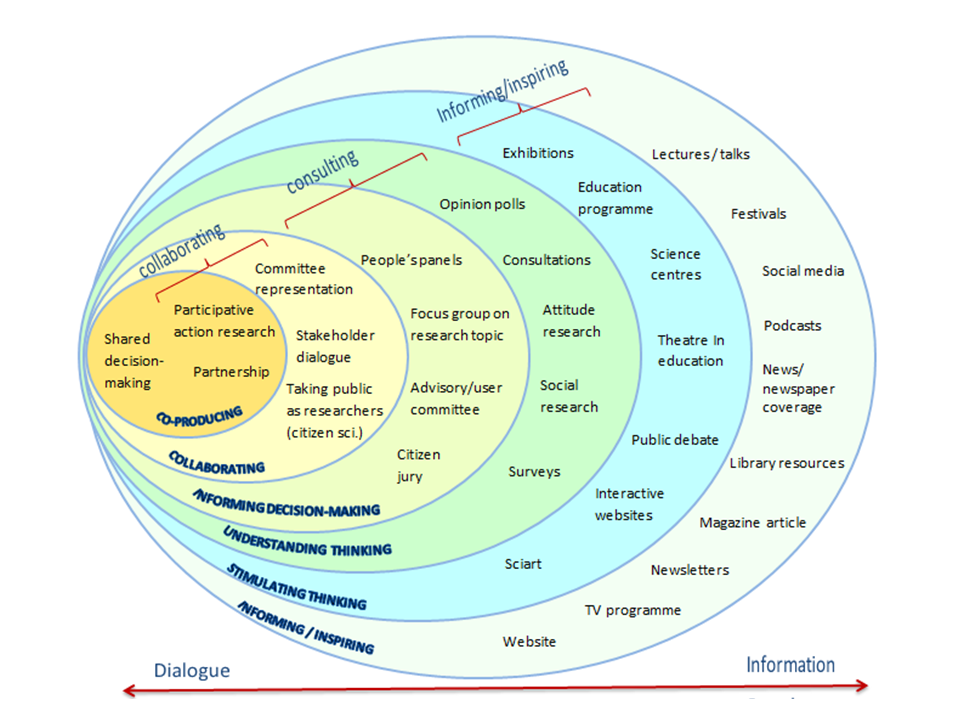
Public Engagement Onion
The Public Engagement Onion is a visual framework originally developed by the Wellcome Trust that maps the different levels and forms of public engagement — from broad, one-directional communication to deep, two-way collaboration.
Like the layers of an onion, the model moves from the outside in: the outer layers represent activities such as broadcasting information or raising awareness, where the engagement is relatively wide-reaching but shallow. Moving toward the center, activities become more interactive and participatory, culminating in shared decision-making and co-creation at the core.Action

Placemobil - Tactical Urbanism
The Place Mobil is a cargo bike that takes up two parking spaces when unfolded. However, as it is officially classified as a bicycle, it can be parked anywhere in public spaces (including parking lots) free of charge and legally.

Tree Budget Graz
Tree budget Graz is an innovative financing model introduced by the City of Graz to systematically fund the planting and maintenance of urban trees. It draws from three sources: compensation fees collected under the city's tree protection ordinance (which requires replanting or financial compensation when trees are removed), voluntary tree sponsorships open to individuals and companies, and project-specific budget approvals by the city council. Together, these streams create a dedicated financial pool that ensures greening efforts are not dependent on a single, uncertain budget line.

Regular table for district politics and initiatives
In this format district politics and initiatives meet up in a casual setting. This benefits everyone: On the one hand politicans can efficently update several initiatives at the same time and get wind of citizens troubles related to urban space at an early stage. Initiatives on the other hand get insights and can discuss their visions and potential future collaborations.