From Unlock15
Welcome to the UNLOCK15-Toolbox - we are collecting tools to empower „agents of change“ from civil society as well as city officials to unlock existing lock-ins. We hope you will find some relevant tools to drive change towards mobility transition in your context!
From experience, three types of tools are need for real change: tools to create and communicate evidence, tools to envision possible futures and scenarios and participatory tools for on-site action.
Evidence
This type of tools help you to collect evidence, which supports the change you are aiming for. Some tools also allow crowd-based approaches to involve citizens in a broad manner. Evidence helps to convince decision makers to back-up change.
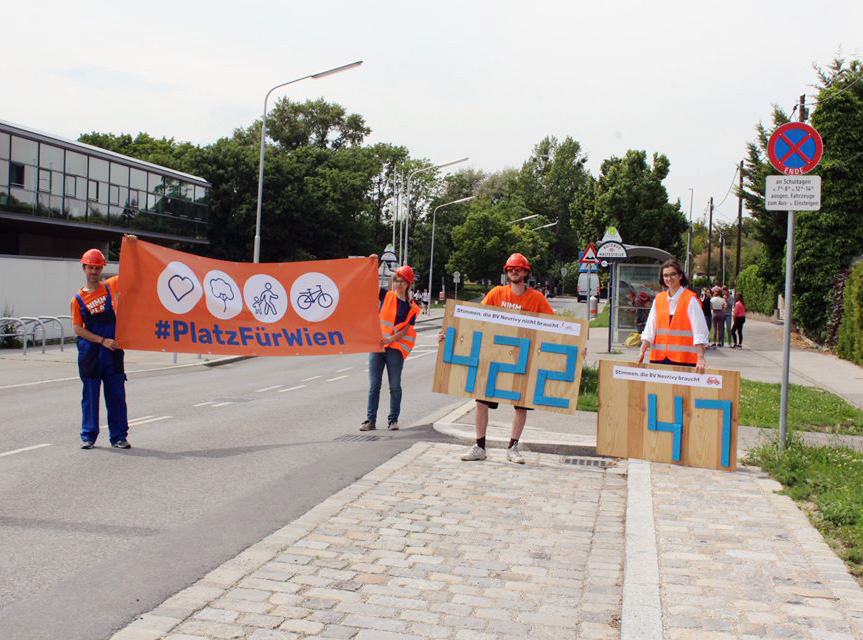
Staging evidence for safer school streets
Excel sheets come to your mind when thinking of evidence? Think twice! The initiative "Wir machen Wien" showed powerfully how to not only collect valuable evidence, but also how to stage it in a dramatic way.
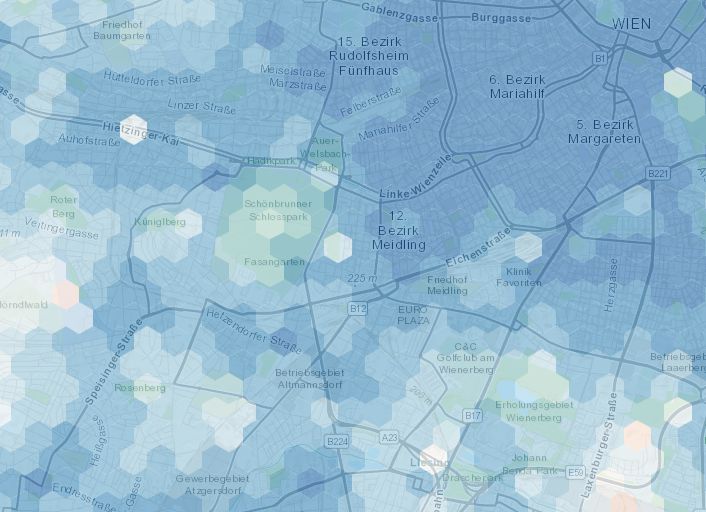
15min-City online Maps
The map shows how close services are if one lives in different areas of the city: in red areas the time needed to access the closest services is on average higher than 15 minutes, while the blue are 15-minute areas. We consider the average time of accessibility to the closest 20 POIs.
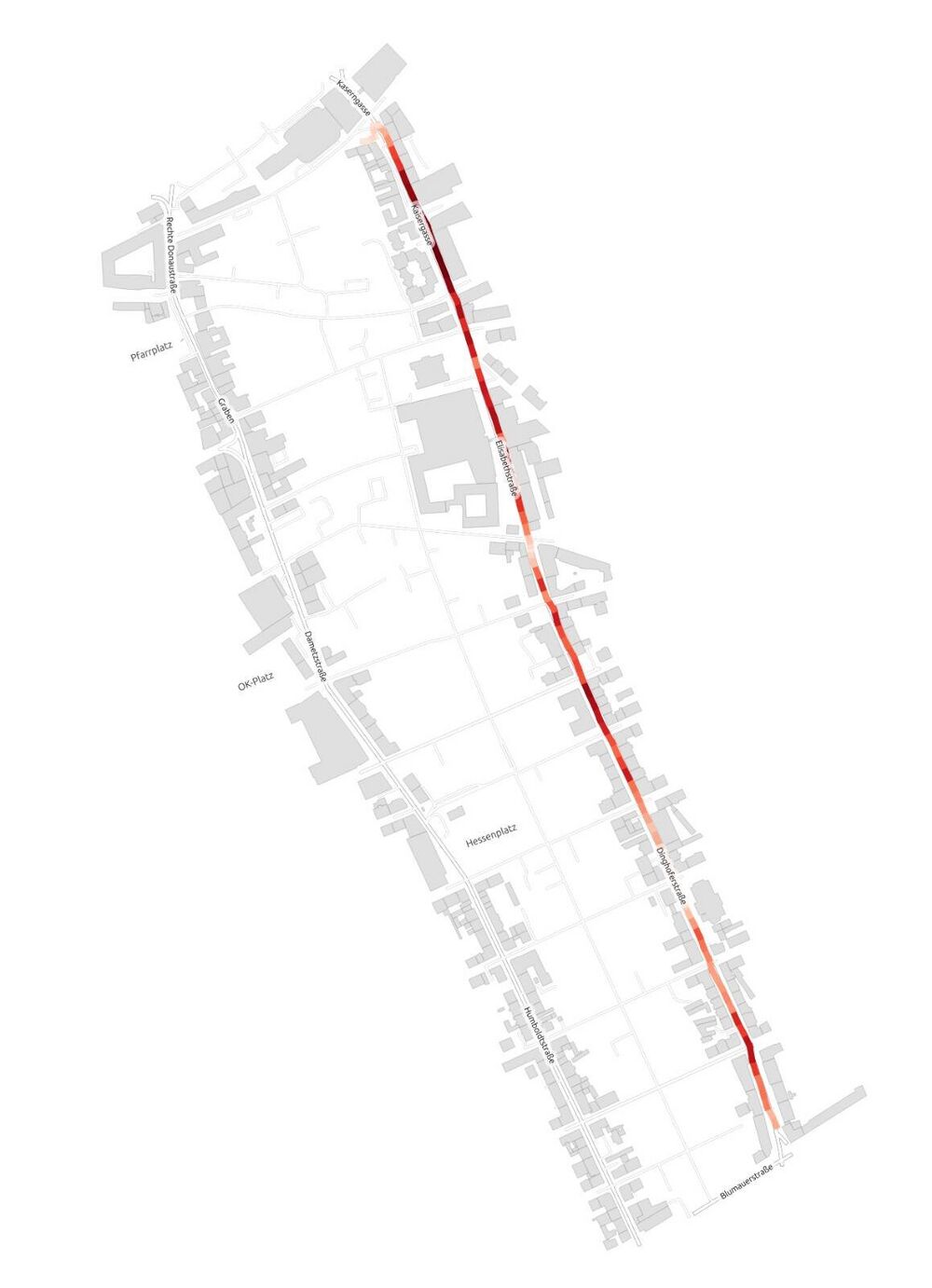
Measuring the speed of public transport
"We can’t reduce the speed limit on this road because the busses would lose time!“ This or similar arguments may come up in discussions about street transformations. In those situations, it can help to bring evidence into the discussion. For example by measuring the speed of busses. Read more about how we did it:
Vision
In this category you find tools that help you to create a vision of what you are aiming for. A strong vision is key for driving change because it helps you to grow as a movement and to shift public opinions. This category also includes tools that help you envision how you want to work together as a group.

Task & Maintenance: What makes groups work?
This tool is a quick, easy tool that is effective at helping groups understand the different roles in making groups work: different leadership skills.
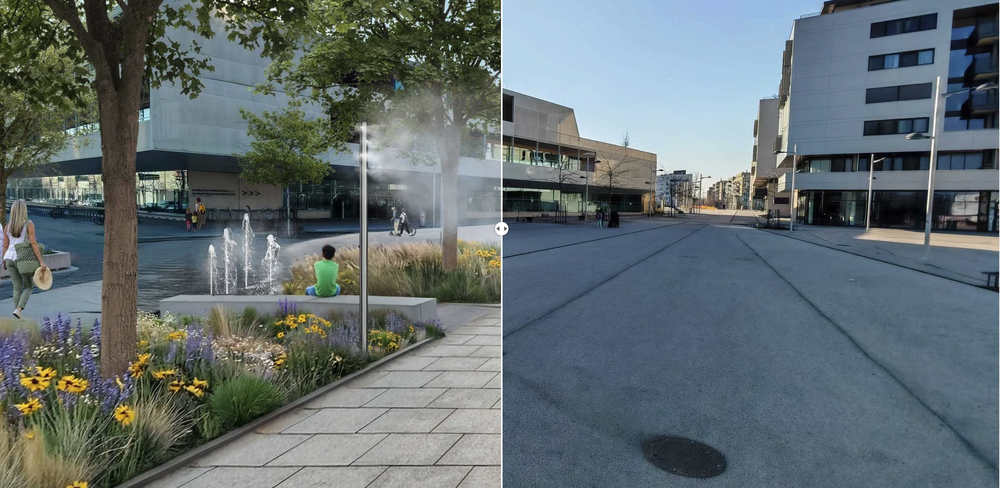
Make your city bloom! Before/After Visualization
Necessary changes often fail due to a lack of imagination. This AI tool translates your ideas into images and show how car-dominated spaces can be transformed into livable, sustainable places. The tool by "Blooming Cities" helps you showcase the possibilities of a flourishing city.
Newspaper of Tomorrow
When different stakeholders come together, they bring different perspectives. This is of great value for participatory and collaborative work. However, there is a risk that objectives and goals are different and difficult to combine. Creating a shared vision in the group becomes then an essential part of a project. This tool can be very helpful to reach this objective in a creative way.
Action
Small steps towards the realisation of local change can help to make the vision tangible and also easier to be discussed. Tools for action help to make the impact of change tangible and involve local communities.

Placemobil - Tactical Urbanism
The Place Mobil is a cargo bike that takes up two parking spaces when unfolded. However, as it is officially classified as a bicycle, it can be parked anywhere in public spaces (including parking lots) free of charge and legally.

Crowd Funding
Crowdfunding — and specifically civic crowdfunding — is an approach where communities, individuals, and organizations collectively finance local public projects through online platforms, often in combination with contributions from municipalities, foundations, or companies.
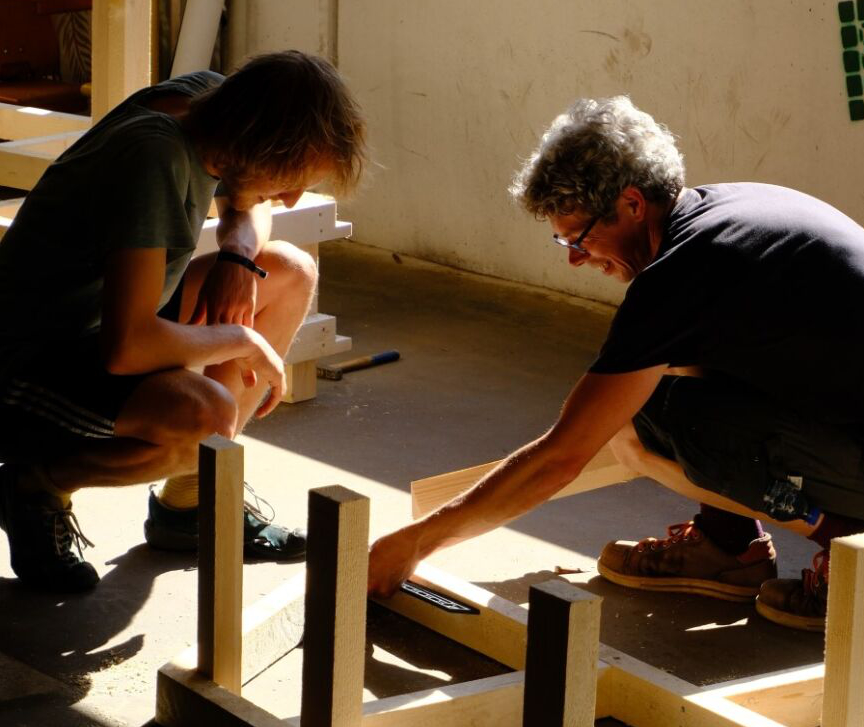
New local collaborations to boost change!
Lack of funding or stuck in slow processes? Maybe a local collaboration can boost your vision to the next level! That happened to the Galileigasse in Vienna. Learn more about it: