From Unlock15
No edit summary |
Matteo Stark (talk | contribs) No edit summary |
||
| Line 1: | Line 1: | ||
{{#semorg-overview:toolbox | {{#semorg-overview:toolbox | ||
|list intro=All tools with a focus on: [[Evidence]] / [[Vision]] / [[Action]] | |list intro=All tools with a focus on: [[Evidence]] / [[Vision]] / [[Action]] | ||
|filter links= | |filter links=toolbox-language,toolbox-spatial-context,toolbox-effort-level,toolbox-challenge,toolbox-target-group | ||
|card template=toolbox | |card template=toolbox | ||
|nopagination | |nopagination | ||
|limit=100 | |limit=100 | ||
}} | }} | ||
Revision as of 13:44, 17 August 2026
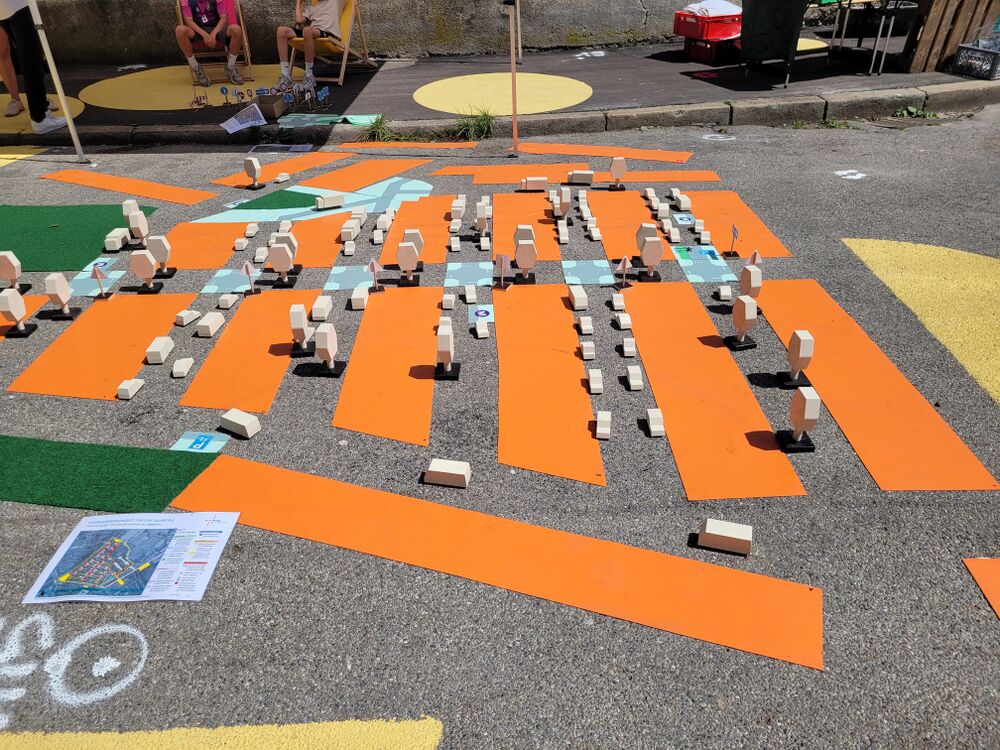
"Local Mobility Concept" game
Designed to give residents a tangible voice in mobility planning, this tool enables citizens to actively co-create future street and mobility concepts. Through hands-on interaction with wooden figures and modular street components, participants can develop and communicate their own ideas, priorities, and mobility measures for their neighborhood.
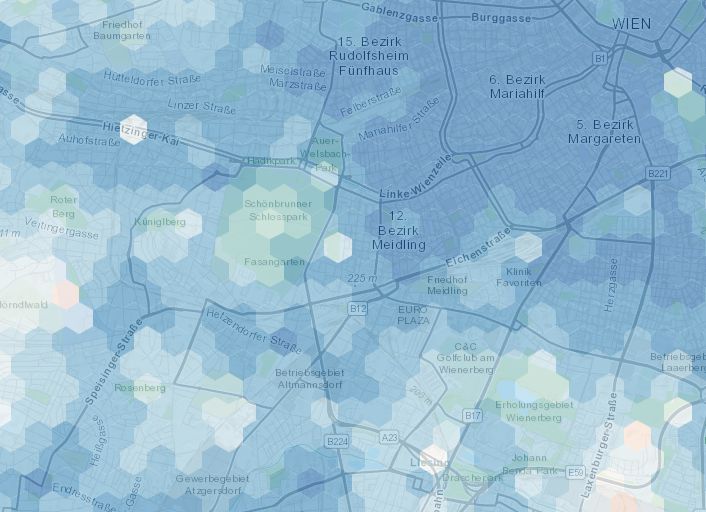
15min-City online Maps
The map shows how close services are if one lives in different areas of the city: in red areas the time needed to access the closest services is on average higher than 15 minutes, while the blue are 15-minute areas. We consider the average time of accessibility to the closest 20 POIs.

Align on Your Impact Goals
Get crystal clear on the change you want to achieve, in the near-term and long-term. Impact is a very loosely used term universally, and can be used to describe an influence or effect on virtually anything. Taking time to explore and align on your impact goals will ensure that your team and stakeholders are all working towards the same vision of success.
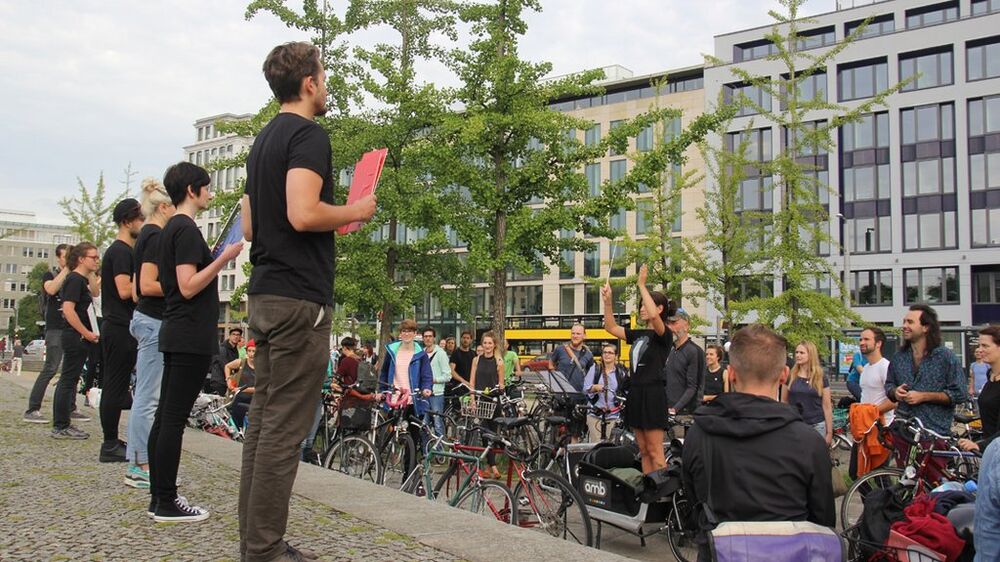
Art Spin bike tour
The aim of the tour is to challenge traditional contexts of exhibiting art by producing new creative content in unconventional locations, while at the same time promoting urban cycling and sustainable communities. See also RAD performance in Vienna as an example.

Bikebus
Bikebus is an organized bicycle group for children who cycle safely to school together with accompanying adults. Like a school bus, only by bicycle.

Building durable groups with low hierachies
Defining goals, structures, roles and means of decision making are all crucial parts of founding and maintaining collectives, cooperatives, and other groups. Many aspects of organisation however remain ad hoc, informal and opaque, creating the possibility of power imbalances, misunderstandings and exclusion. The link will lead you to website with key questions that any group should consider and define during its formation.
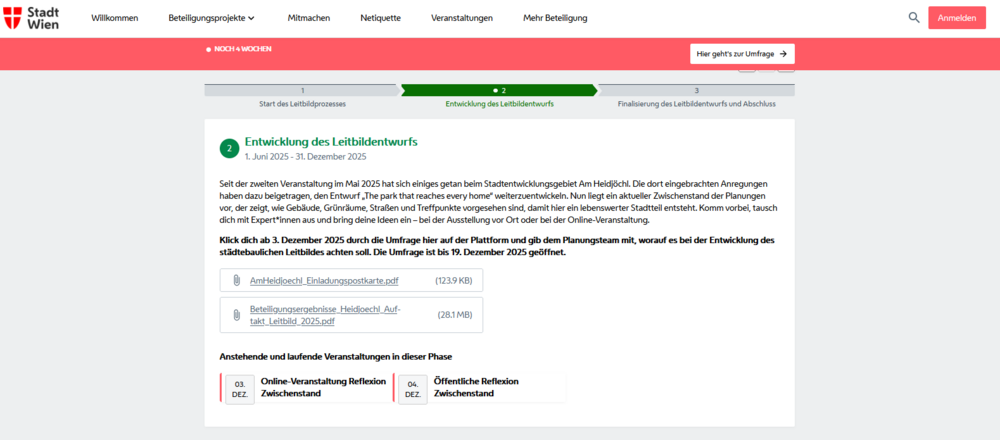
Centralized participation platform
"Mitgestalten.wien" is an example for a centralized participation plattform. We used it to run a survey for Unlock15 in Vienna about the future development of a street. "decidim.org" and "govocal.com" are plattforms that can help you set up a centralised participation plattform.
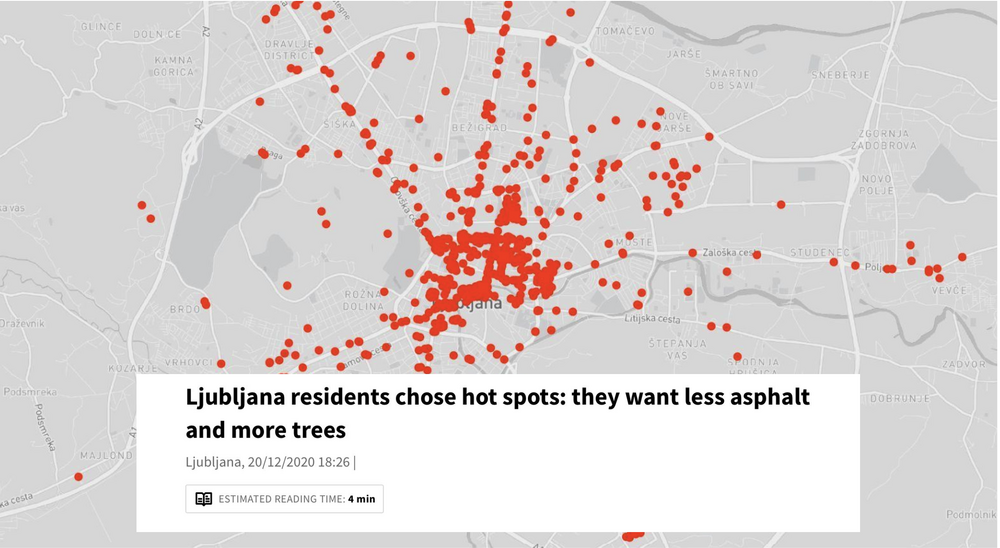
Collaborative heat maps
This tool allows you to create collaboratively maps! Drawing from the knowledge of many people, maps can become a powerful communication tool.

Collect signatures to back up your local vision!
You have a very clear picture of the local change you want to achieve? You want to show decision makers how much support your vision locally has? Then a petition might be your cup of tea to drive change.
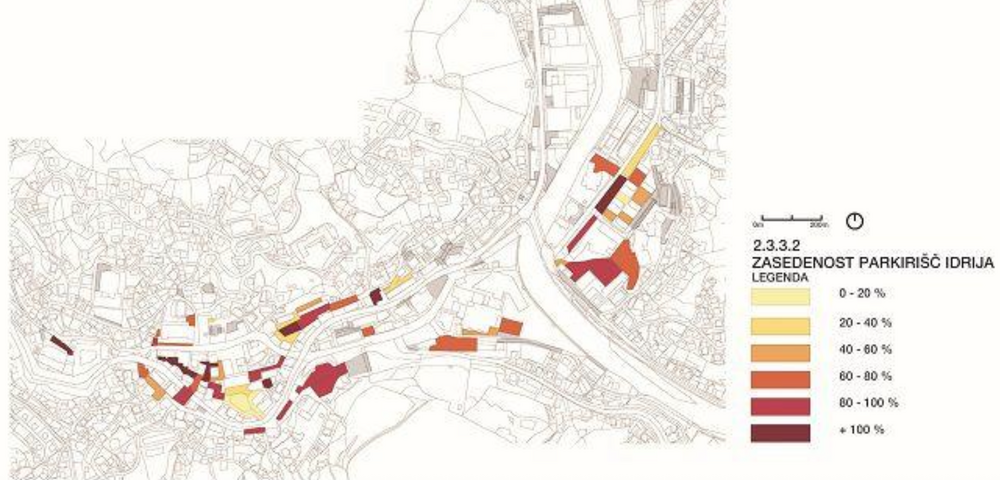
Collecting data about parking occupancy
Opponents of street transformation often claim, that there are to little parking possibilities. But is that true? Evidence in Ljubljana showed that the city has rather a problem with how parking space is unevenly occupied.
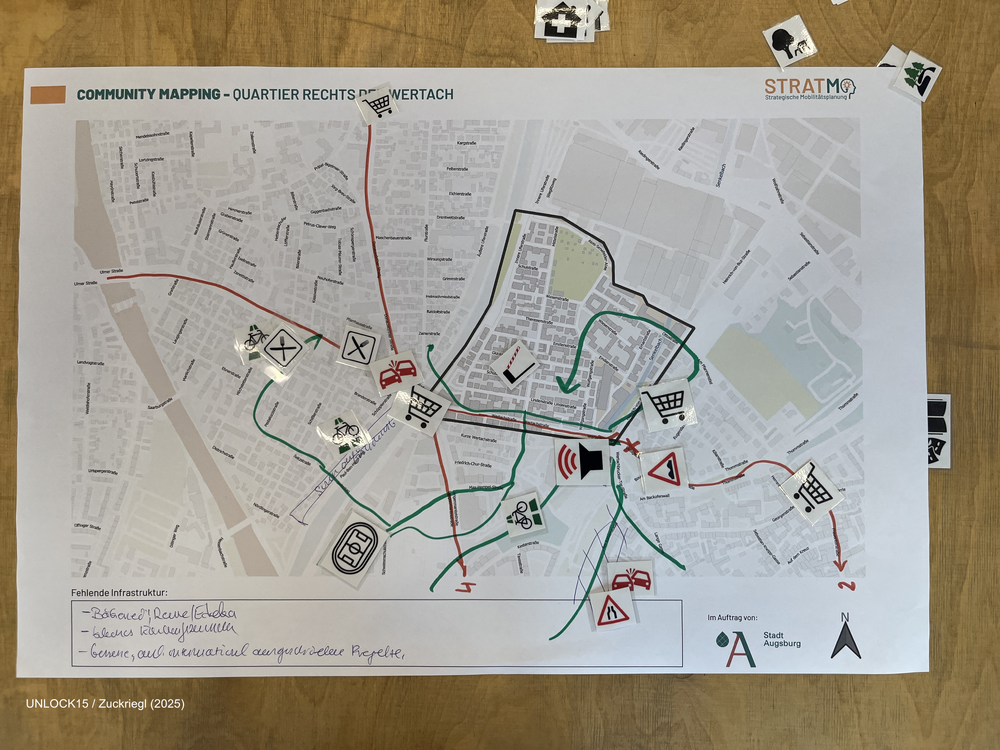
Community mapping
Collaboratively mapping maps about a neighbourhood can shed light on factors that influence everyday transport-related decisions.
Creating a team culture
Capture the shared purpose, values and behaviours of a team with this template from mobilisation Lab. This helps to build an environment in which everybody feels safe and motivated.

Crosswalk action
During their campaign for a safer city, the initiative "Platz für Wien" temporarily rolled out crosswalks. Places were chosen where crosswalks would make a big difference for the safness of pedestrians.
Crowd Funding
Crowdfunding — and specifically civic crowdfunding — is an approach where communities, individuals, and organizations collectively finance local public projects through online platforms, often in combination with contributions from municipalities, foundations, or companies.
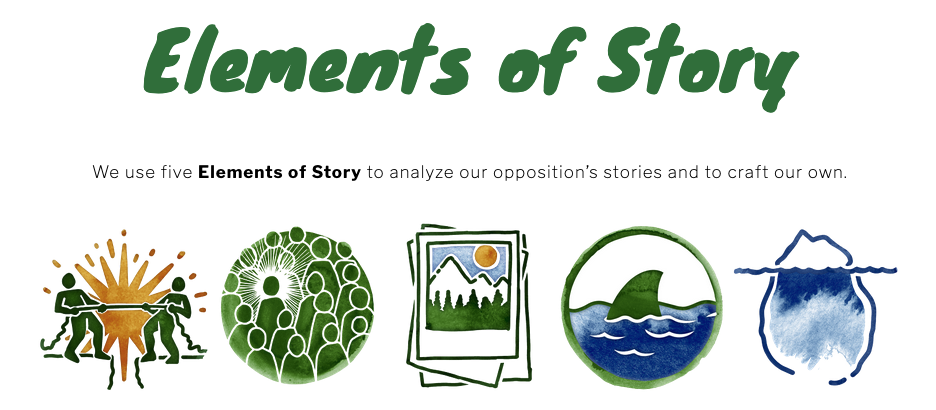
Developing a convincing story for your campaign
The framework of "Story-Based Strategy" helps you figure out your campaign’s narrative strategy. It’s composed of tools or worksheets that you can use to analyze the opposition’s story, the current popular narrative about your issue, and develop a way of pitching or talking about your issue that will win over the folks you need to win!

Doorstep chats
Do you know this situation? You organise a meeting to discuss traffic calming in your neighbourhood and the people most affected by the noise don't show up. You are not the only one and there is a solution: Doorstep chats are an useful method to reach out to people that are not yet part of the discussion but are needed very much.
Efficient decision making in low hierarchy settings
A tool that helps you make collective decisions that everyone genuinely support, distribute responsibility across the group, and build a culture of equal participation.
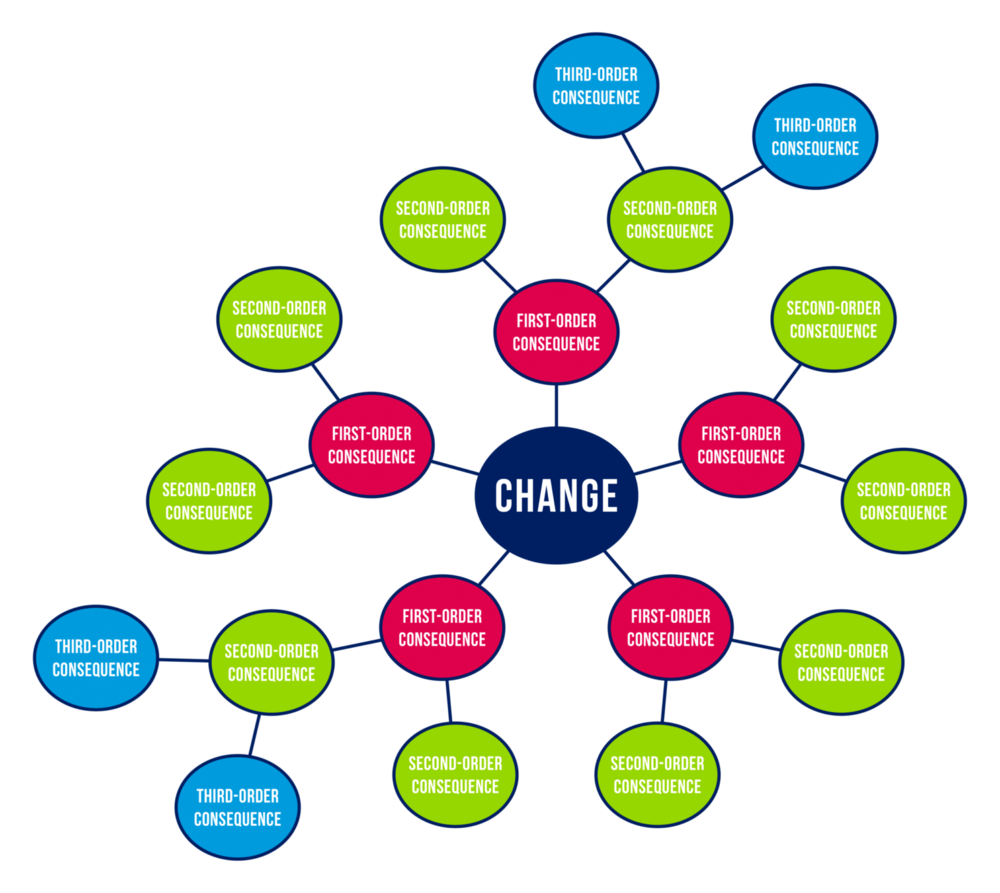
Forecasting change
Some forecasting can't be done by looking into an weather app. This tool helps you to capture possible scenarios of what could happen in your neighbourhood.
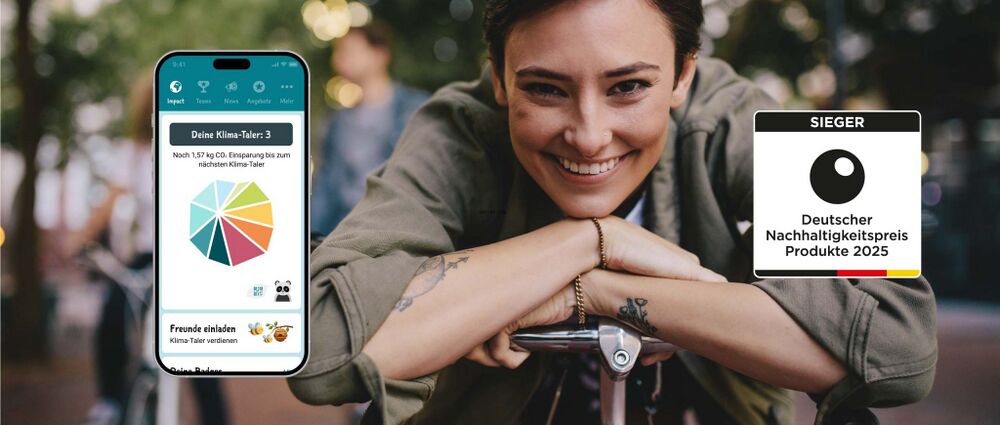
Gamification of climate friendly behaviour
Gamification is the application of game-design mechanics — such as points, rewards, competitions, challenges, and progress tracking — to non-game contexts in order to motivate behaviour change. In the context of urban sustainability and mobility, it turns everyday choices like taking public transport, cycling, or saving energy into visible, rewarding actions that feel meaningful and fun rather than obligatory.

Getting to the core of human behaviour
The Five Whys is a simple yet powerful research method from human-centered design. Starting with a broad question about a person's habits or behaviours, you ask "why" five times in a row — not horizontally ("why else?") but vertically, going deeper with each answer until you uncover the emotional and human roots of a problem. The method takes only about 15 minutes, requires nothing more than pens and paper, and is designed to get to the core of a person's beliefs and motivations.

Headlines from the future
A participatory activity to support aspirational goal setting, by imagining a more positive future.
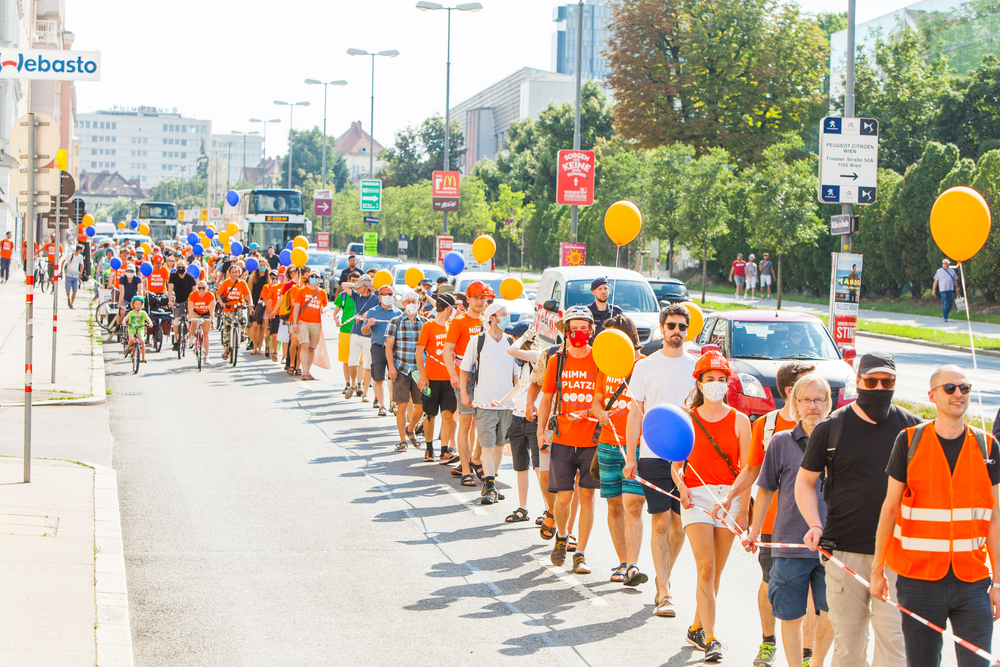
Human pop up bike lane
Using simple tools such as ropes and a group of volunteers, pop-up bike lanes can be registered as a demonstration yet still allow for traffic flow to continue - but with a new division of space.
Indicators for measuring the impact of innovative projects
To systematically measure the impace of of innovative mobility projects and initatives.
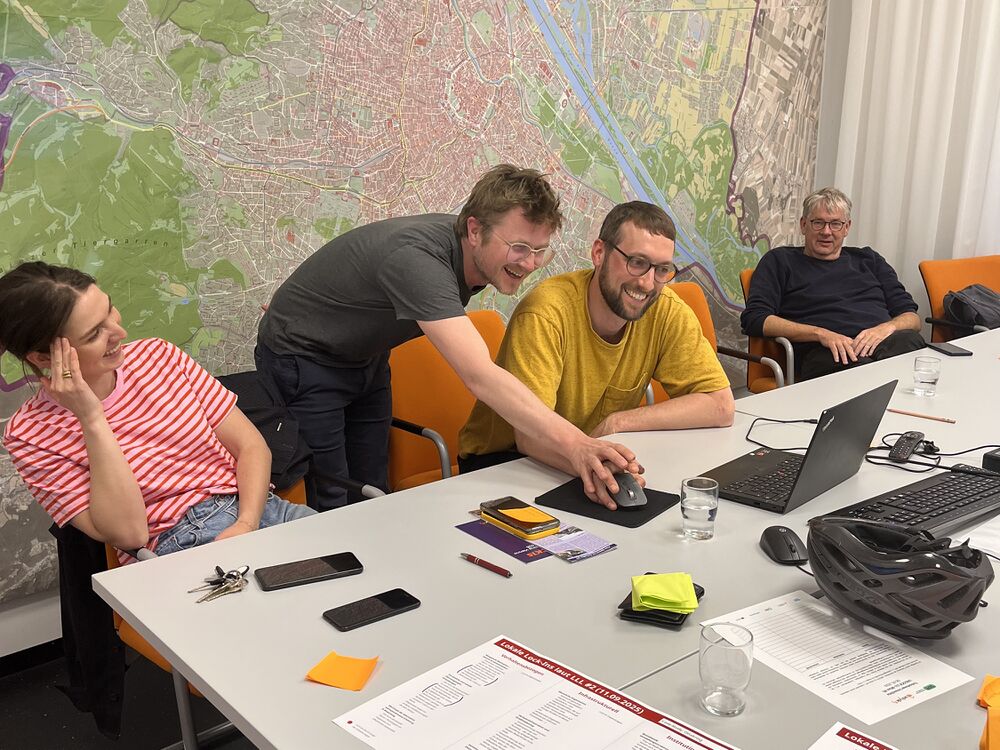
Joint Survey between initiatives and district politics
In Vienna they managed something extraordinary: They did a survey collaboratively between district politics, administration and civil society. This has a lot of potential for different reasons:

Learning public participation hub
The Vienna Climate Team is a participatory initiative in Vienna that brings residents, local stakeholders, and the city administration together to co-develop and implement climate protection measures at the district level. It enables citizens to submit ideas, collaborate with experts, and take part in decision-making processes related to urban sustainability.
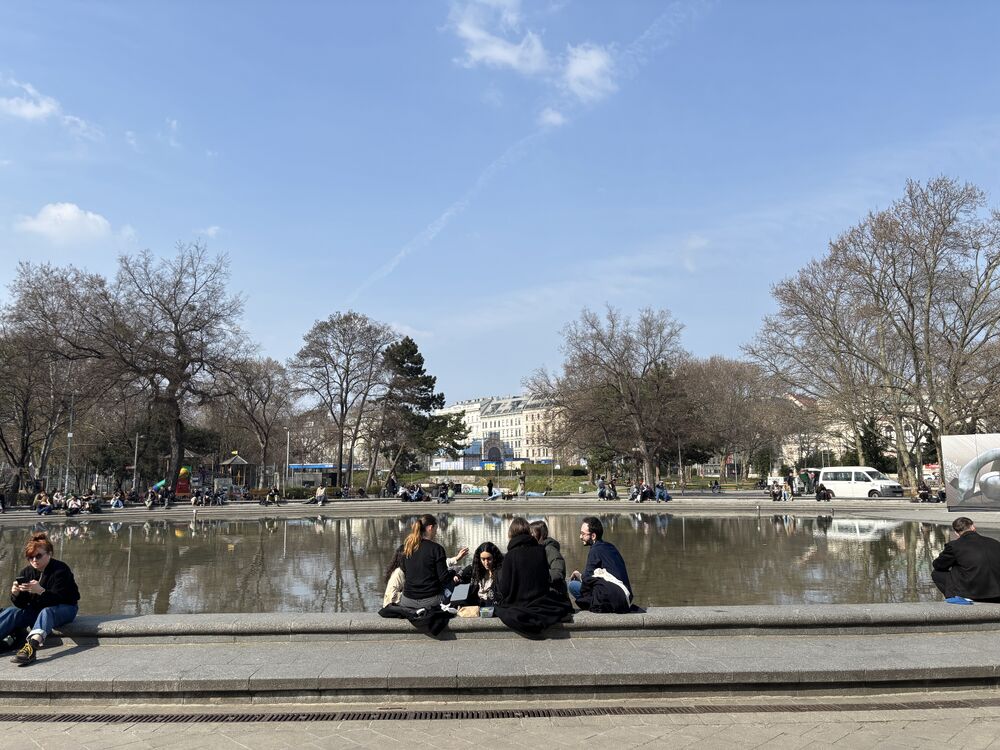
Local coordination circle
A local coordination circle is made out of local people e.g. shop owners, residents as well as people from the administration. The various perspectives provided by the project advisory board are intended to help identify planning requirements at an early stage and to take them into account more effectively as the project progresses. They act, so to speak, as seismographs for the mood and needs within the neighbourhood.
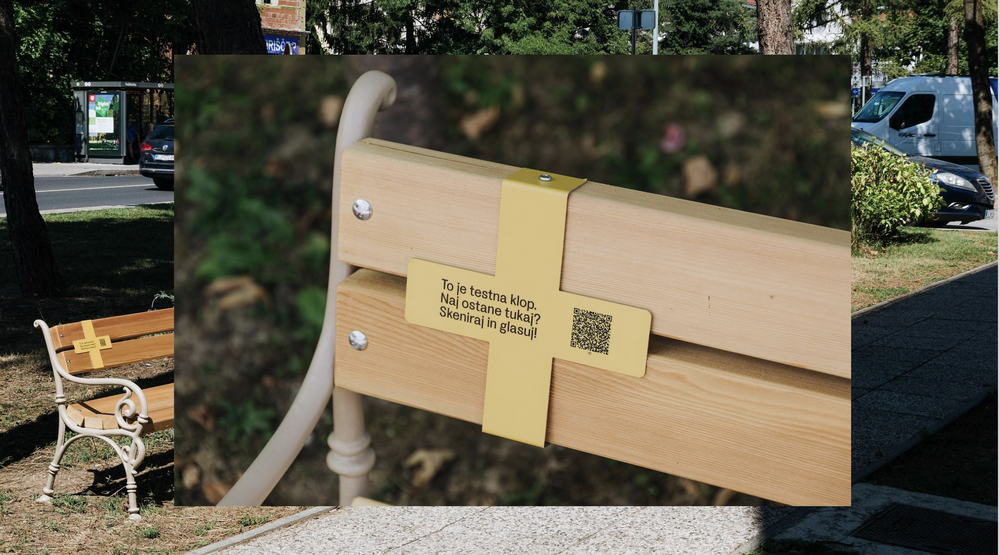
Low effort survey in public space
The picture stems from Ljubljana, where the urban design studio prostorož set up benches in public space. They attached a QR-Code, where people could vote if they wanted this bench to stay. The outcome will suprise you!
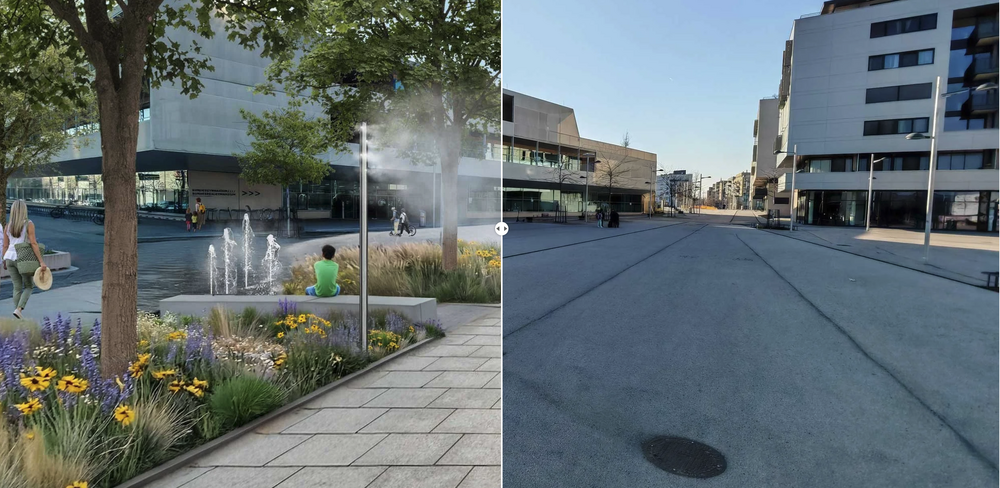
Make your city bloom! Before/After Visualization
Necessary changes often fail due to a lack of imagination. This AI tool translates your ideas into images and show how car-dominated spaces can be transformed into livable, sustainable places. The tool by "Blooming Cities" helps you showcase the possibilities of a flourishing city.
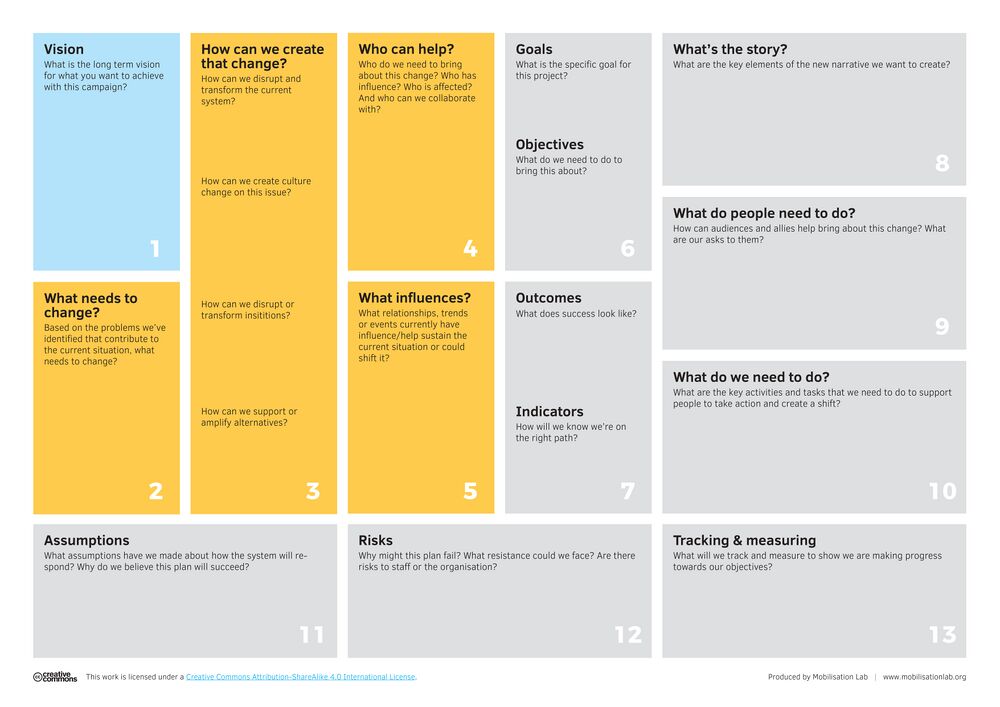
Make your vision achievable with a Campaign plan
A campaign is a planned, time-limited series of targeted measures. This campaign structure helps you to break down your vision into achievable steps.
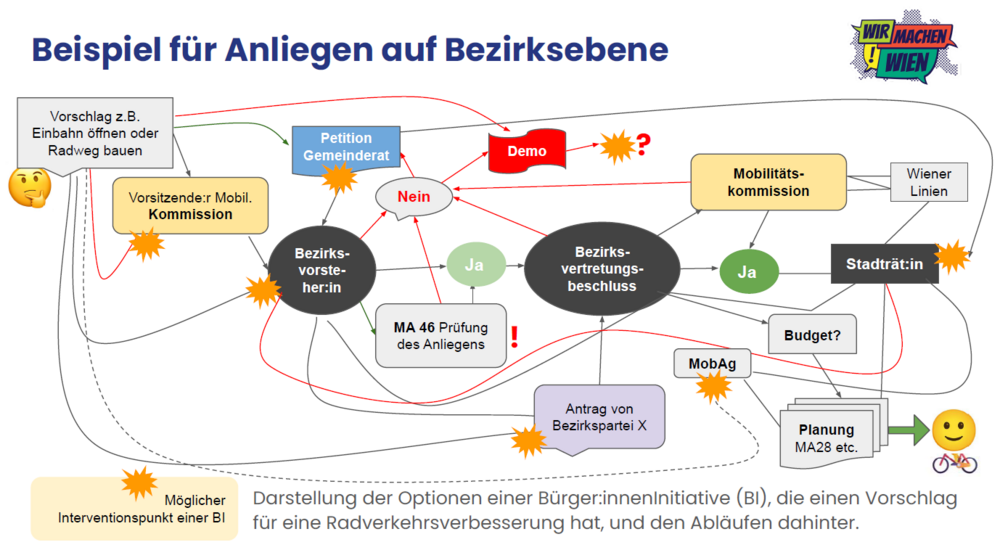
Making processes in public administration more transparent
Mapping of relevant workflows within the public administration to identify critical points / steps.
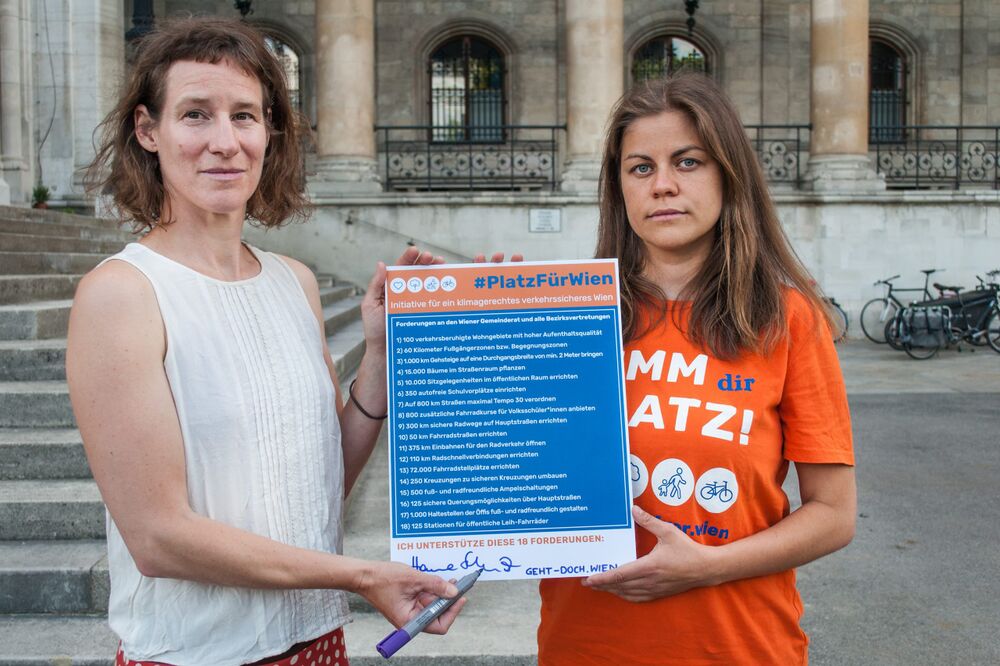
Making specific demands that are backed up by evidence
The "Platz für Wien" Initiative had a lasting impact on Vienna because they specified their demands and backed them up with scientific findings (e.g., demand for 50 km of bicycle lanes by 2030). They even has scientists speaking up for them, which made their demands even more valid.
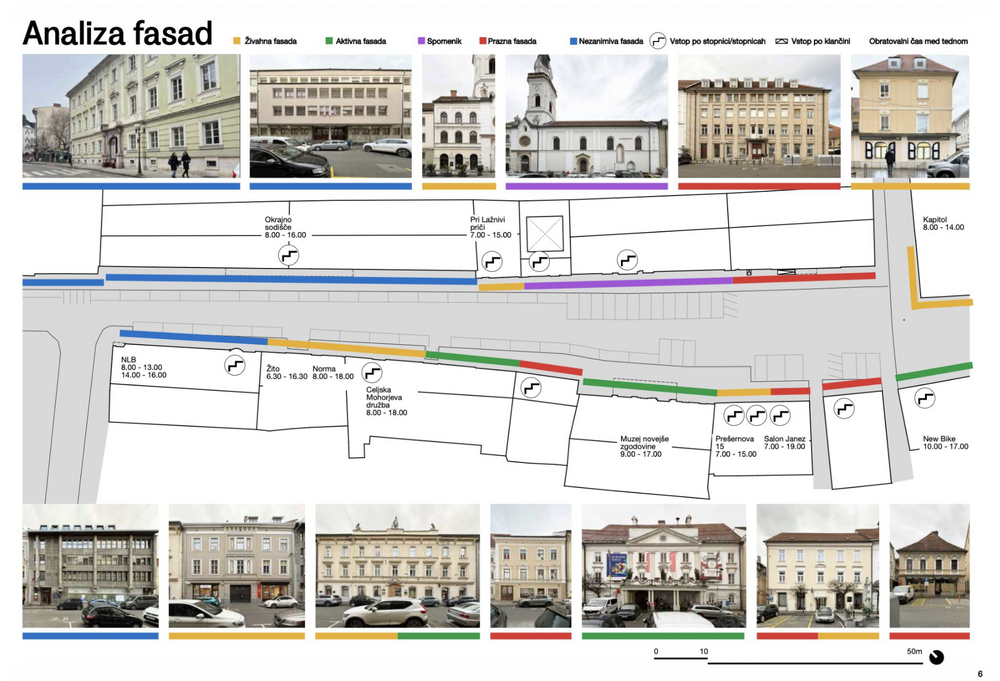
Mapping and analysing facades
"We need parking space otherwise our shops will die!" This is an argument often brought forward by opponents of street transformation. The urban design studio prostorož confronted this claim with evidence. Read more about how they did it!
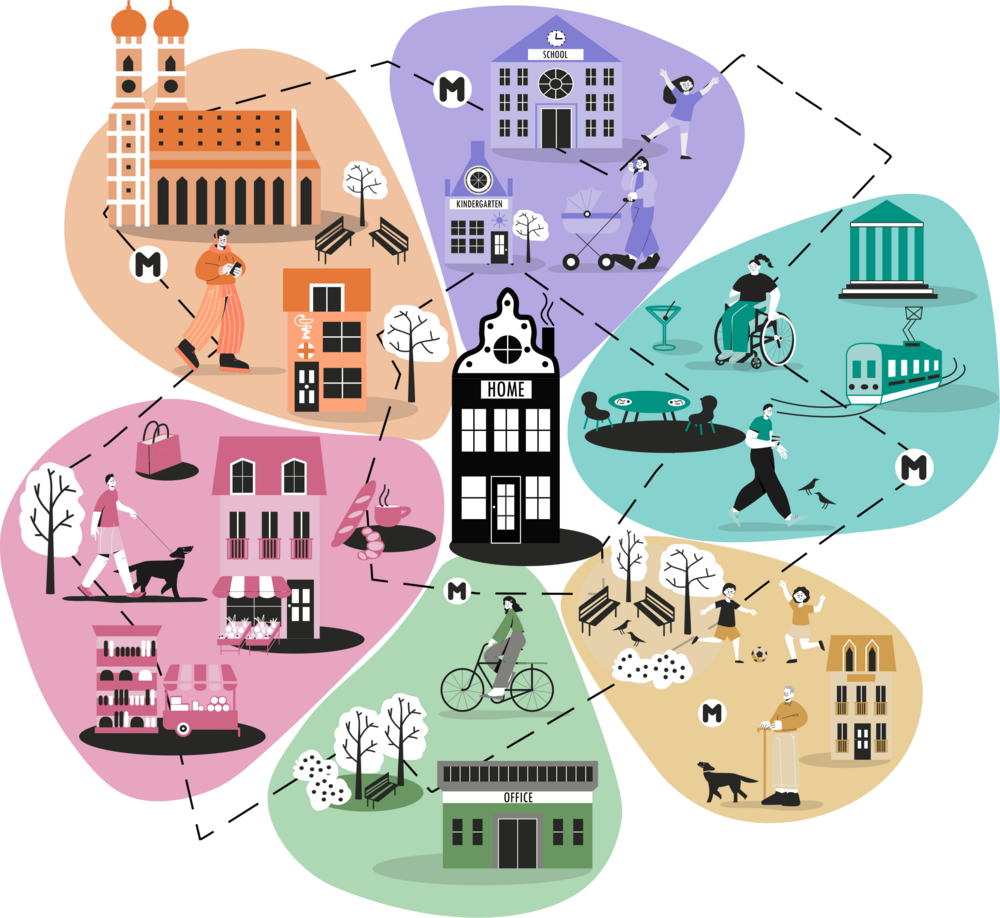
Measuring the 15-min city: Flowers of Proximity
The flowers are a planning tool that invites participants to look beyond their current travel routines by imagining instead how they would like to get around. This perspective grounds accessibility planning in people's needs and desires, helping make cities more livable, sustainable, and fair.
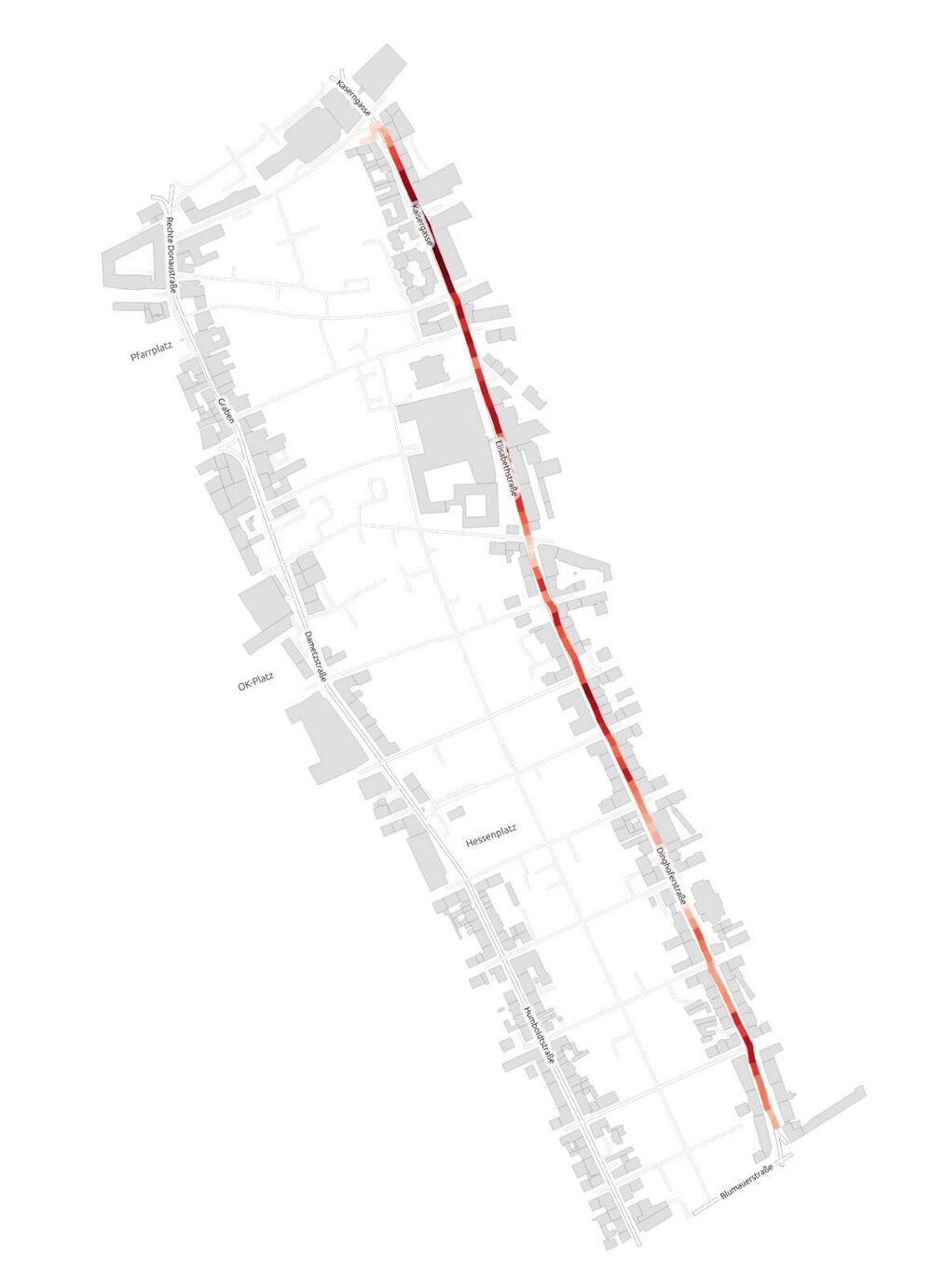
Measuring the speed of public transport
"We can’t reduce the speed limit on this road because the busses would lose time!“ This or similar arguments may come up in discussions about street transformations. In those situations, it can help to bring evidence into the discussion. For example by measuring the speed of busses. Read more about how we did it:
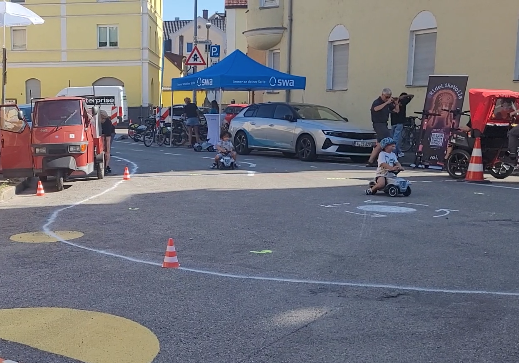
Mobility Parcour
This experiential mobility tool empowers citizens to discover and evaluate shared mobility options through direct, hands-on experience. Participants can test different sharing modes, such as bicycles, cargo bikes, e-scooters, and shared cars, in a low-threshold setting without complex registration processes. By reducing barriers to trial and exploration, the activity encourages informed mobility choices and increases awareness of the opportunities that shared mobility can offer in everyday life.
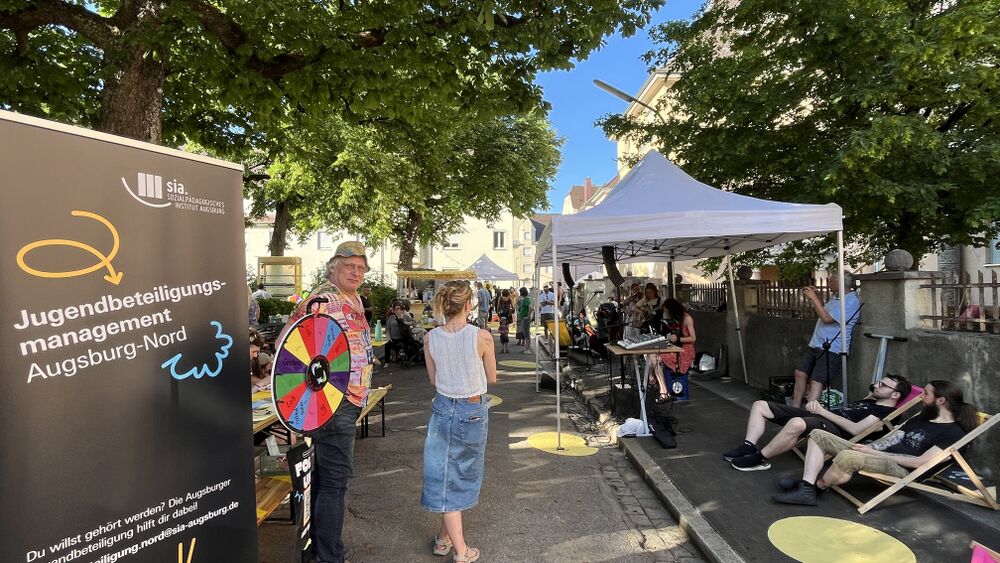
Neighborhood Party
A Neighbourhood Party can create an inclusive space where residents can explore sustainable mobility options, connect with local initiatives, and discuss the future of mobility in their community. Through interactive activities, demonstrations, and informal exchanges, participants are empowered to learn about available alternatives, share their experiences, and actively contribute to shaping a more accessible, sustainable, and liveable neighbourhood.
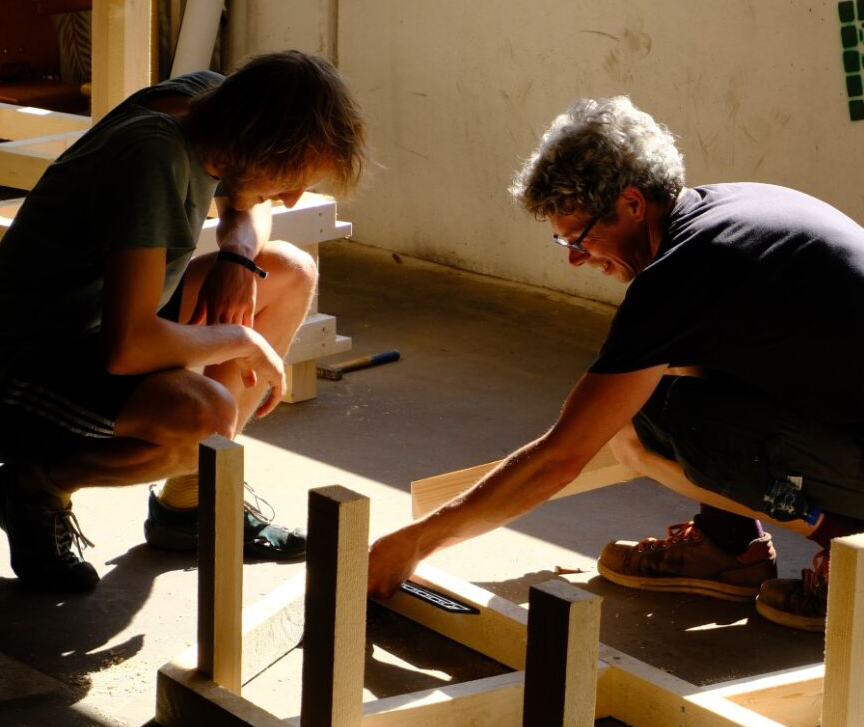
New local collaborations to boost change!
Lack of funding or stuck in slow processes? Maybe a local collaboration can boost your vision to the next level! That happened to the Galileigasse in Vienna. Learn more about it:
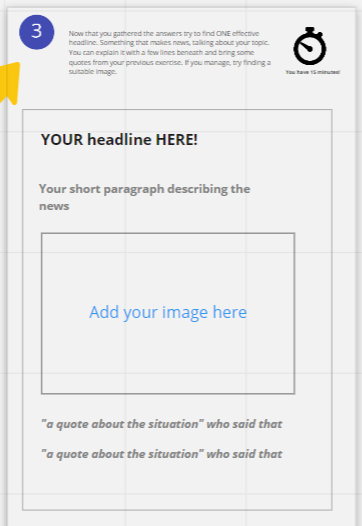
Newspaper of Tomorrow
When different stakeholders come together, they bring different perspectives. This is of great value for participatory and collaborative work. However, there is a risk that objectives and goals are different and difficult to combine. Creating a shared vision in the group becomes then an essential part of a project. This tool can be very helpful to reach this objective in a creative way.
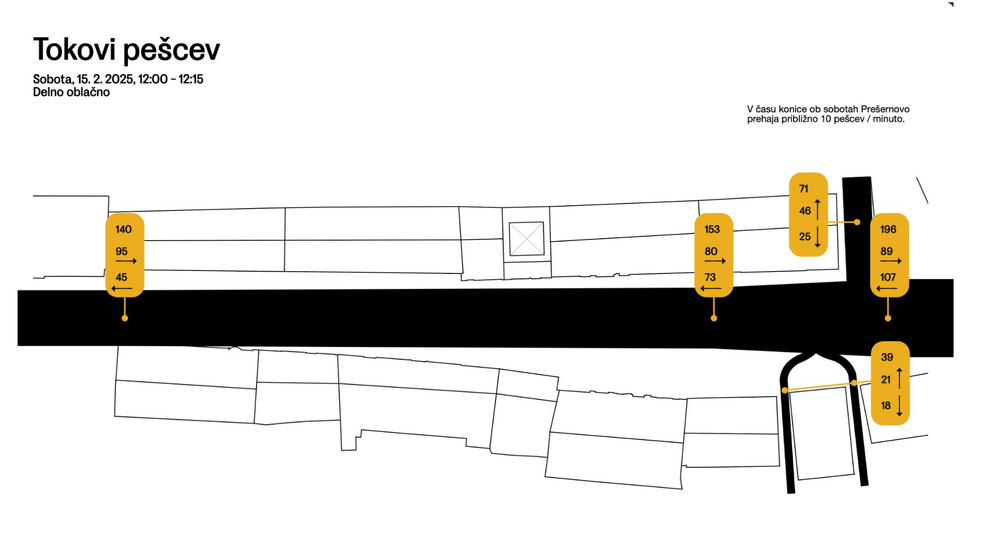
Observing and visualising human behaviour in public space
Collecting data on how people use space can give you a solid foundation to discuss how it should be designed. These apps can help you to collect your data.
Onboarding framework
The Onboarding Framework is a structured yet flexible tool designed to help grassroots civil society initiatives welcome and integrate new volunteers with as little friction as possible.

Placemobil - Tactical Urbanism
The Place Mobil is a cargo bike that takes up two parking spaces when unfolded. However, as it is officially classified as a bicycle, it can be parked anywhere in public spaces (including parking lots) free of charge and legally.
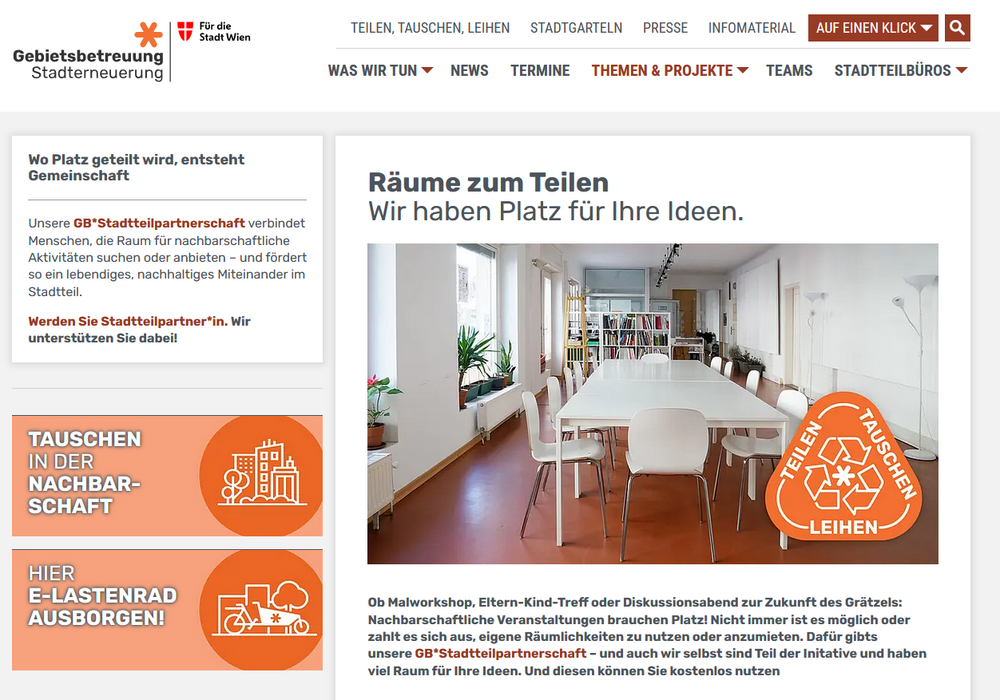
Platform for free meeting spaces
A simple, user-friendly tool for overview and booking of free spaces for use by initiatives.
Plenary for sharing emotions
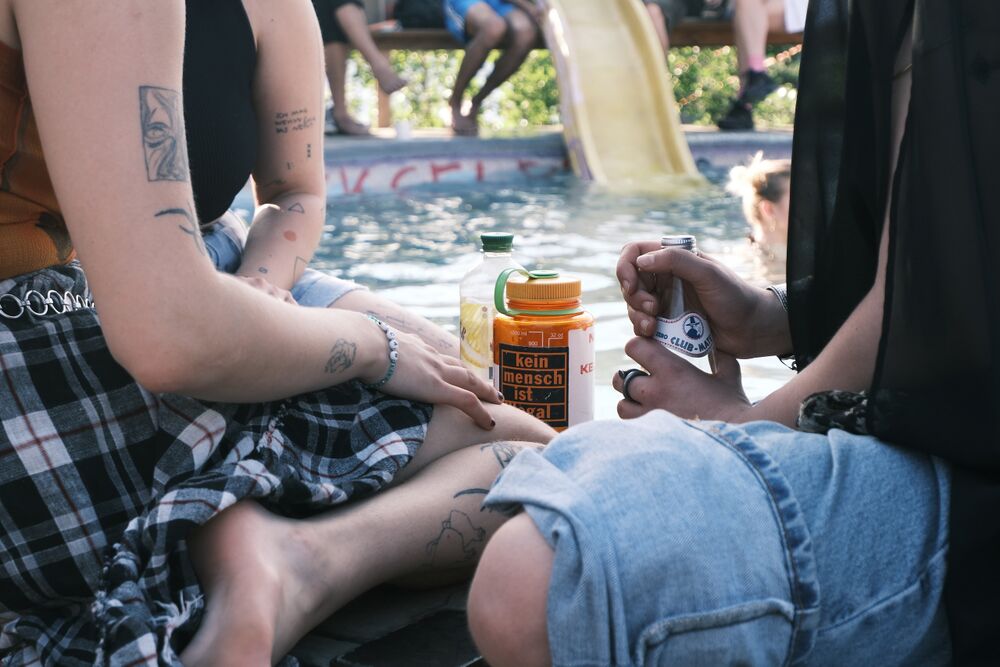
A plenary for emotions is a structured group format that creates dedicated space for emotions and interpersonal dynamics within a collective or initiative — separate from task-oriented or decision-making meetings. Rather than pushing emotions to the margins of group life, the Emo-Plenum treats them as essential information: a signal about the health, motivation, and tensions within the group.
Power Mapping
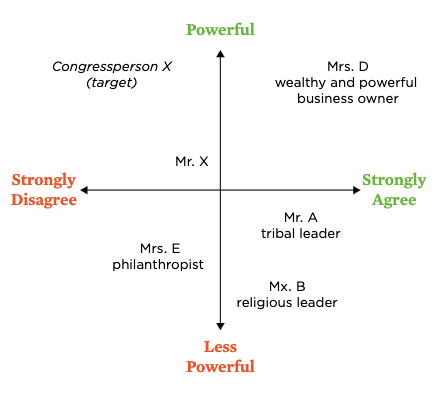
Power Mapping is a visual method for strategically analyzing actors, relationships, and dynamics of influence. It helps identify the right target individuals or institutions — those who actually have the authority to make or shape decisions — and reveals through which pathways and allies one can gain access to them or build pressure on them.
Presswork to spread your vision
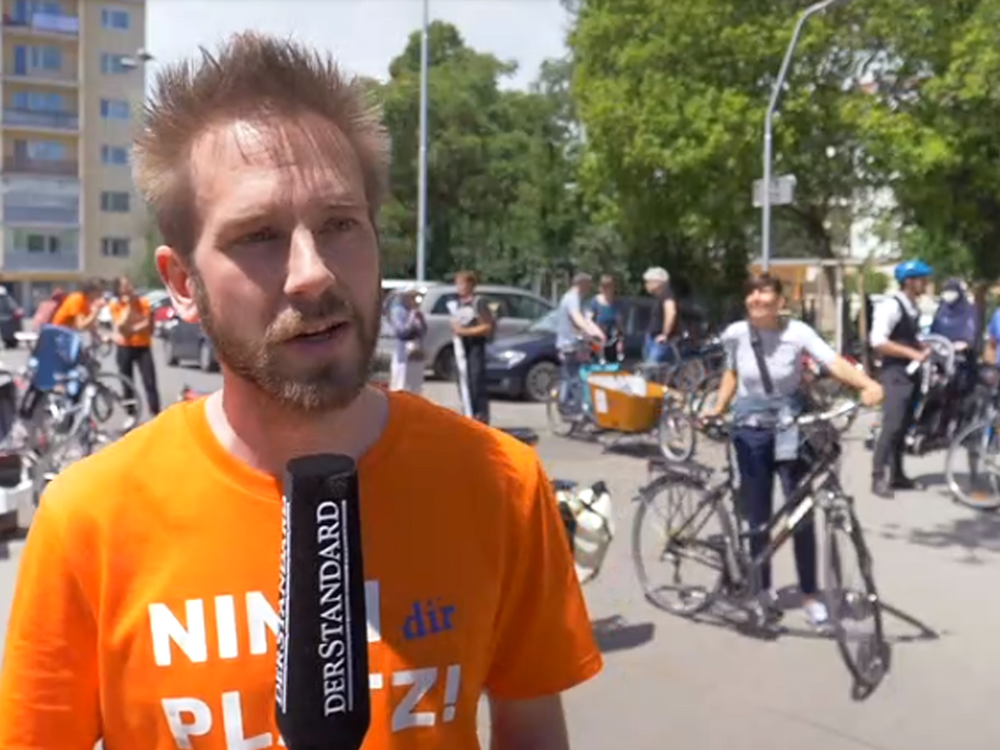
Presswork helps you to spread your vision of change. With a little preperation and a good idea, your work could be covered in the local news by tomorrow. Attached you will find a guide in english and german for successful presswork.
Public Engagement Onion
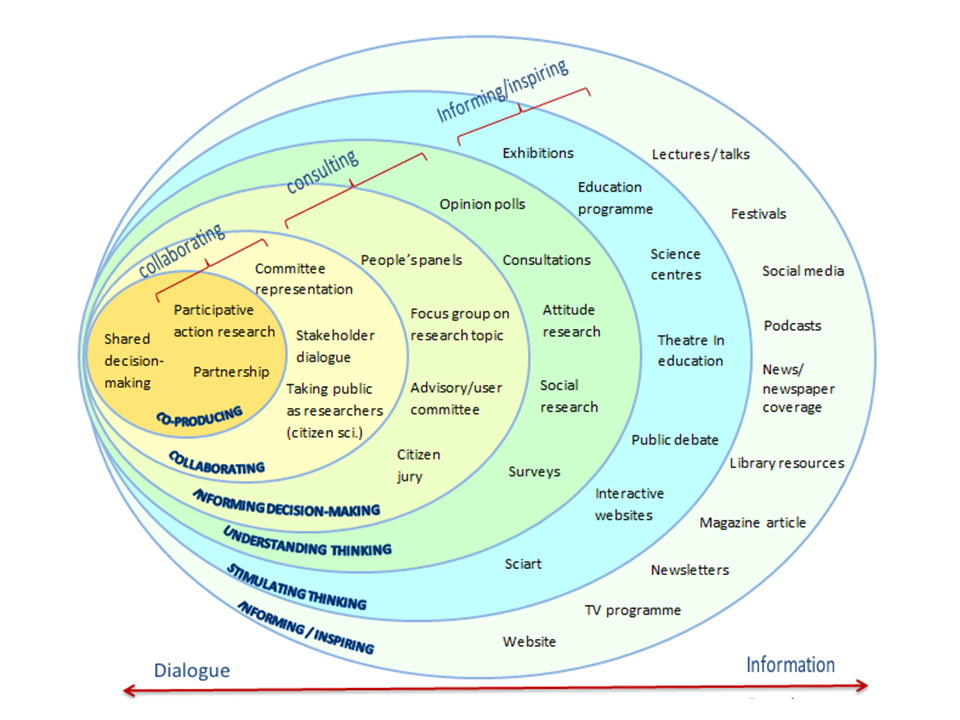
This tool inspires you what kind of participation methods are out there and the level of participation they allow.
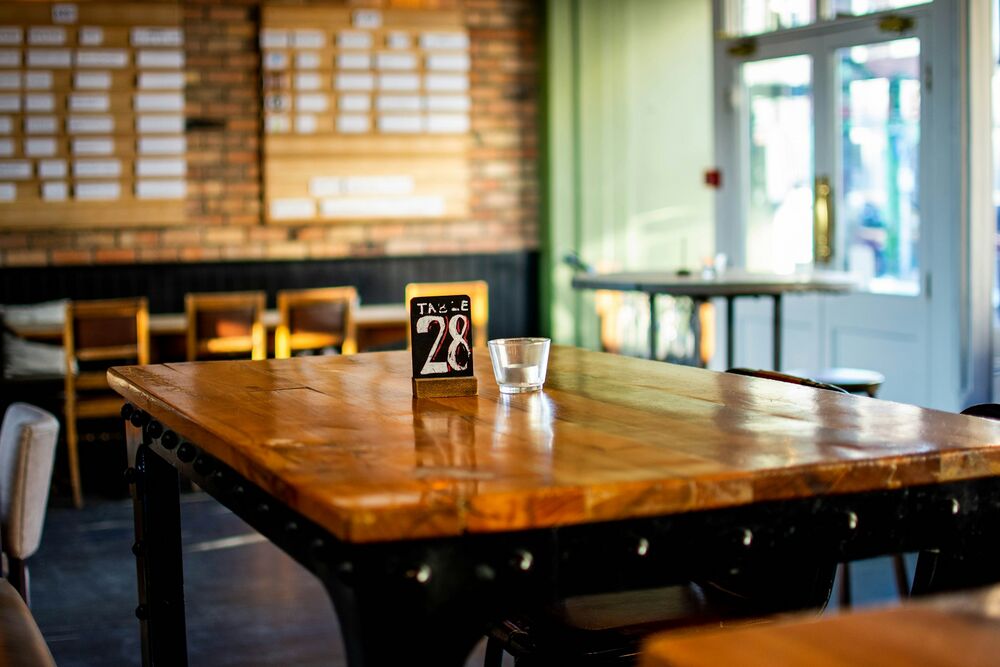
Regular table for district politics and initiatives
In this format district politics and initiatives meet up in a casual setting. This benefits everyone: On the one hand politicans can efficently update several initiatives at the same time and get wind of citizens troubles related to urban space at an early stage. Initiatives on the other hand get insights and can discuss their visions and potential future collaborations.
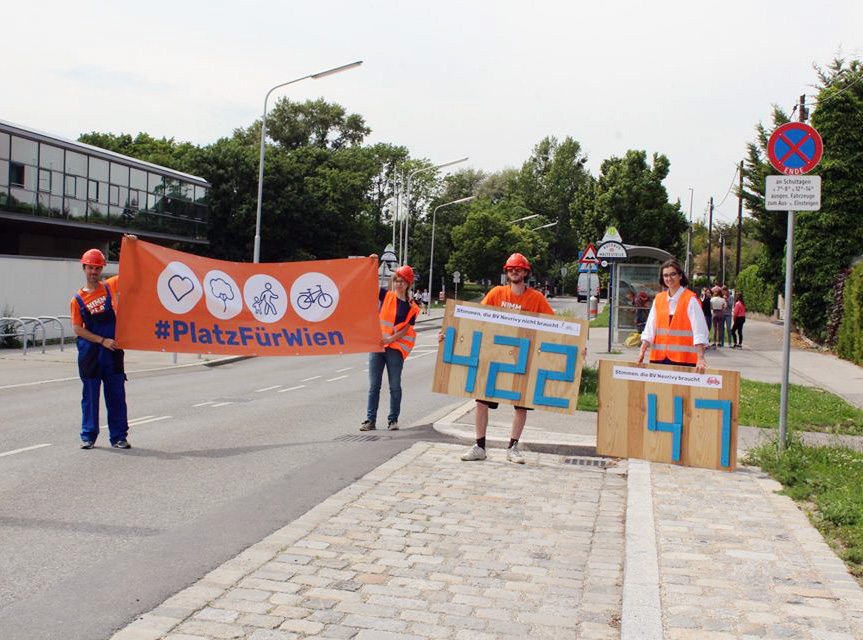
Staging evidence for safer school streets
Excel sheets come to your mind when thinking of evidence? Think twice! The initiative "Wir machen Wien" showed powerfully how to not only collect valuable evidence, but also how to stage it in a dramatic way.
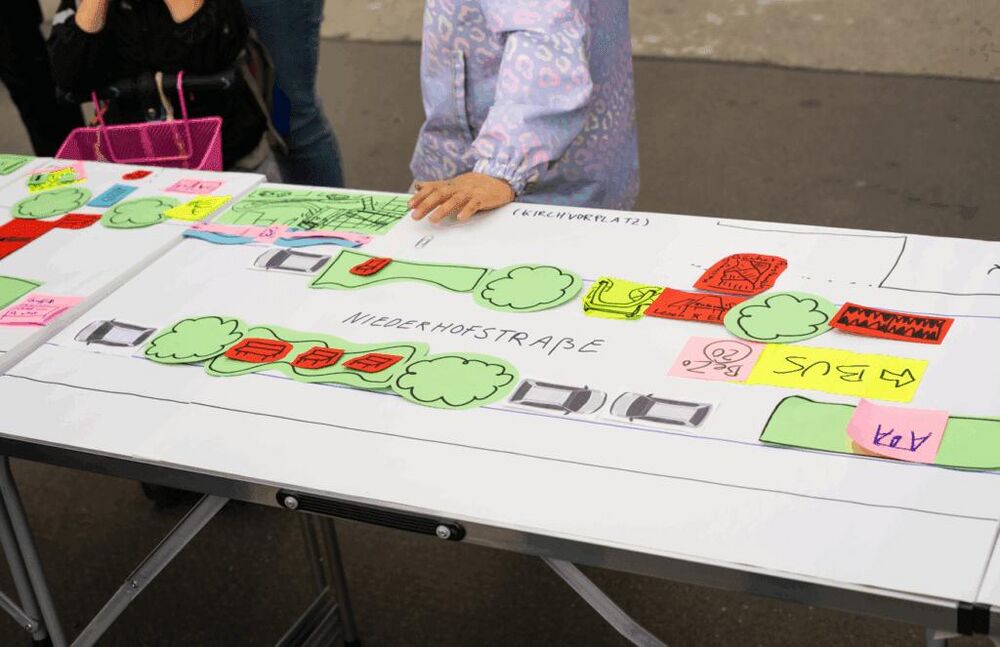
Streetdesign table
By setting up a table in the street, a big print of the layout of your street and pens you can provide a fun way to develop ideas for greening, traffic calming and street furniture. You could discuss with passers-by what uses they would like to see, what space is needed for them, and what ideas they can come up with. From a simple cycle path to a vibrant street park! If you live in Vienna, the platform WirMachenWien can assist and do the workshop with you.
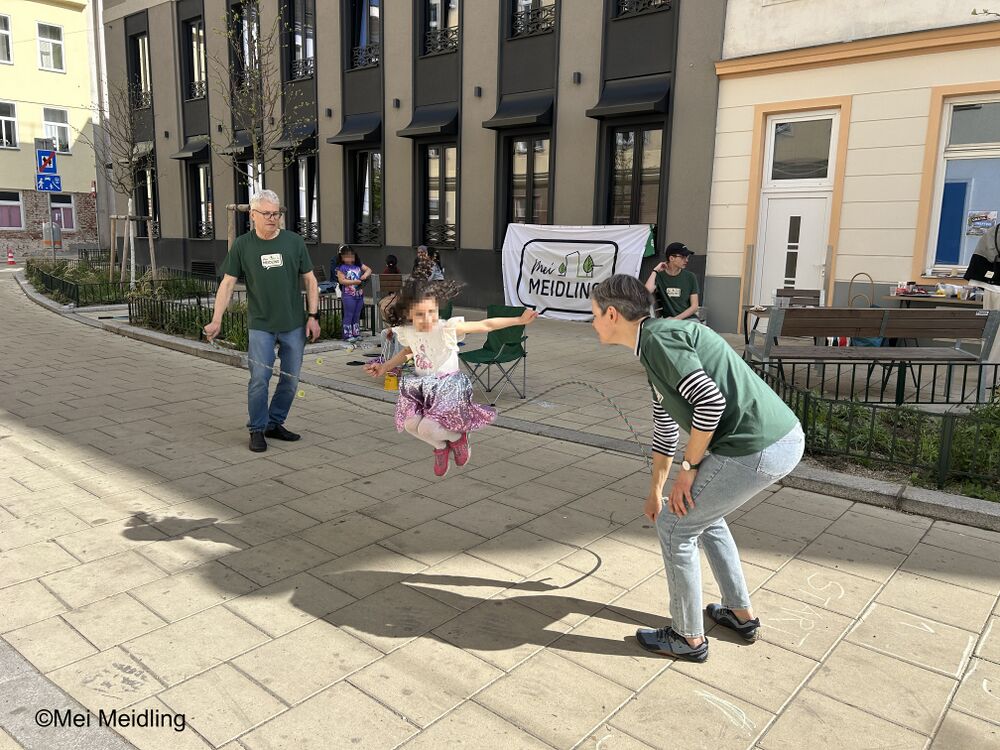
Streetgames
How your neighbourhood should look like should be a concern of everybody living there, right? In reality it can be hard getting in touch with people about this topic. Especially if they have a different social or cultural background than you. This tool helps you to do so anyway.

Task & Maintenance: What makes groups work?
This tool is a quick, easy tool that is effective at helping groups understand the different roles in making groups work: different leadership skills.
Tools to help communicate within a group
Communication platforms like slack or discourse have dedicated channels for different projects and teams, keeping discussions focused and easily searchable. On the scale of a small initiative they don't cost anything.

Tree Budget Graz
Tree budget Graz is an innovative financing model introduced by the City of Graz to systematically fund the planting and maintenance of urban trees. It draws from three sources: compensation fees collected under the city's tree protection ordinance (which requires replanting or financial compensation when trees are removed), voluntary tree sponsorships open to individuals and companies, and project-specific budget approvals by the city council. Together, these streams create a dedicated financial pool that ensures greening efforts are not dependent on a single, uncertain budget line.

Understanding your target groups
Card Sort is a simple yet powerful method for uncovering what matters most to your target audience. Participants rank a set of word or image cards by preference, quickly revealing key priorities and opening the door to deeper conversations about personal values and motivations.
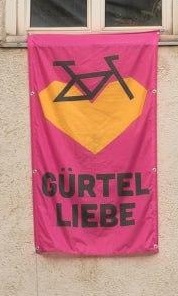
Window Banner
Initiatives use window banners to communicate their demands to the public. This creates visibility and helps the initiative grow, encouraging more and more people to join the cause and the banner campaign.